Top Legal BriefAdministrative law
The Independent Agency Is Now a Managed One
The Court's decision on presidential removal power resolved a ninety-year anomaly. The constitutional argument was always the strong one; the operational consequences are what general counsels have to plan around.

V.P. & Chief Operating Officer · · 6 min read
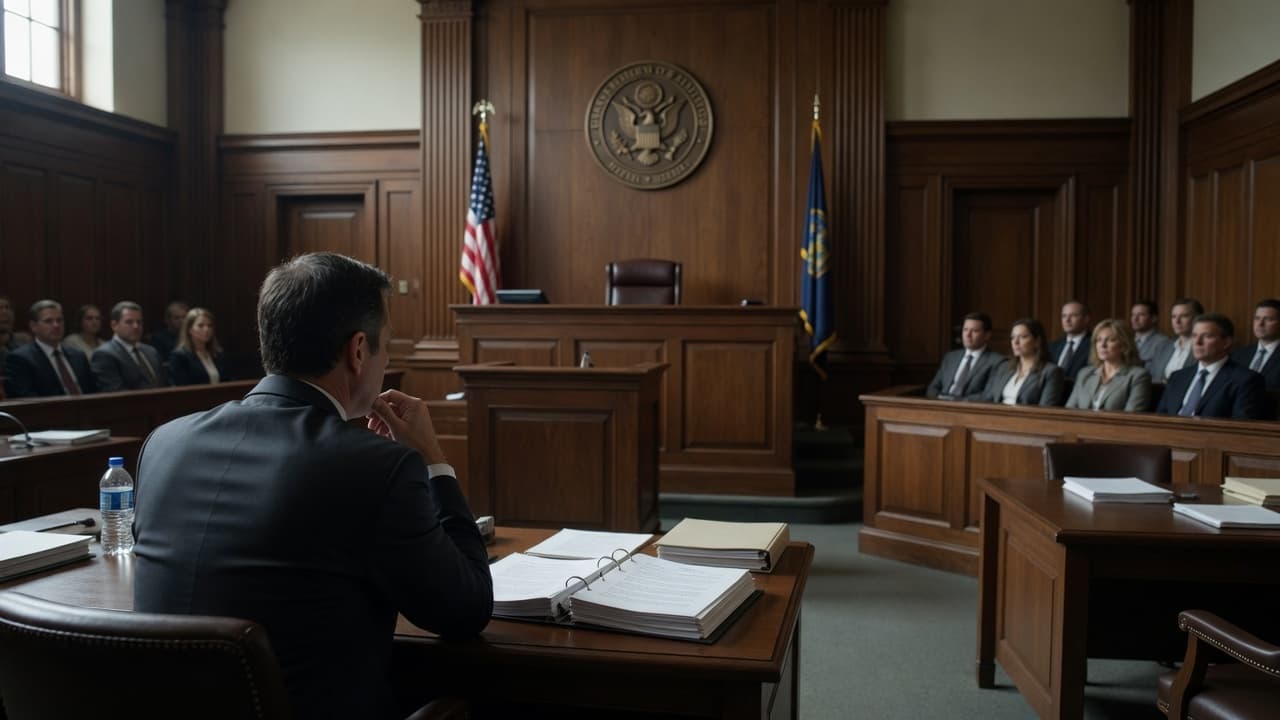
A wide view of an empty courtroom with dark wood panelling
The brief in 60 seconds
- The Court cemented presidential removal authority over agencies long treated as independent, narrowing Humphrey's Executor to the point of practical irrelevance.
- The originalist argument for the result is strong: Article II vests the executive power in a President, and a body exercising executive power outside his control is difficult to defend textually.
- The consequence is regulatory volatility. Agencies whose leadership turns over with the presidency will produce policy that turns over with it too.
- Regulated firms should shorten their compliance planning horizon and build for reversal, not for stability.
The holding
The Court held that the President's removal authority extends to the leadership of agencies that had, since 1935, been understood as insulated from at-will removal. Humphrey's Executor was not formally overruled in every application, but the reasoning leaves little of it standing outside a narrow set of adjudicatory bodies.
The constitutional argument is not a close call, and it has not been for some time. Article II vests "the executive Power" in a President, and requires that he take care that the laws be faithfully executed. An officer who wields substantial executive authority — writing binding rules, bringing enforcement actions, imposing penalties — and who cannot be removed by the person the Constitution charges with executing the laws is hard to square with that text. Humphrey's Executor rested on a characterization of the 1935 FTC as "quasi-legislative and quasi-judicial" that bore little resemblance to the agency even then and none to the agency now.
The operational consequence
Getting the Constitution right and getting a stable regulatory environment are different things, and this decision delivers the first at some cost to the second. Insulation from removal was a crude instrument, but it did produce a form of policy continuity: agency leadership outlasted administrations, and the rules they wrote had a longer half-life than an election cycle.
That continuity is now gone. Enforcement priorities, rulemaking agendas, and merger-review posture at the affected agencies will change with the presidency, and the changes will arrive faster because the leadership change no longer waits for terms to expire.
Firms that built compliance programs on the assumption that a rule finalized in year three of an administration would survive into the next one need to revisit that assumption. The planning horizon for anything not codified in statute is now, realistically, one presidential term.
What to actually do about it
First, separate your compliance obligations by durability. Statutory requirements, consent decrees, and state-law obligations do not move with an election. Agency guidance, enforcement policy statements, and interpretive rules do. Most compliance programs do not distinguish these clearly, and the ones that do not will spend the next decade rebuilding on schedule.
Second, get your regulatory-change monitoring closer to real time. The lag between a leadership change and a visible shift in enforcement posture is measured in weeks now, not quarters, and the early signal is usually personnel and docket composition rather than published policy.
Third, resist the temptation to under-comply on the theory that the rule will be rescinded. Rescission is prospective; enforcement for the period the rule was in force is not. The firms that got this wrong after previous reversals paid for the gap.
The longer view
A decision like this is a reminder that structural constitutional law is not an academic subject. Ninety years of administrative practice were built on a premise the Court has now rejected, and the rebuild is being conducted in real time by the people who have to operate inside it.
The right response is not to relitigate the holding but to plan for the world it creates: faster policy cycles, sharper partisan swings in enforcement, and a growing premium on distinguishing what the law actually requires from what an agency currently prefers.
Bennet's regulatory-intelligence desk tracks leadership, docket, and enforcement-posture change across the affected agencies. Clients can request the current read.
What the desk read
The Top Legal Brief is editorial analysis produced by the Bennet Intelligence Desk. Bennet Legal Research Group is a research and intelligence firm, not a law firm; nothing here is legal advice or a substitute for counsel. Views expressed are the author's own.
Need this level of analysis on your matter?
The desk that writes this brief every morning runs the same research discipline on client engagements.
Request Intelligence